
Keeping connected documents in agreement
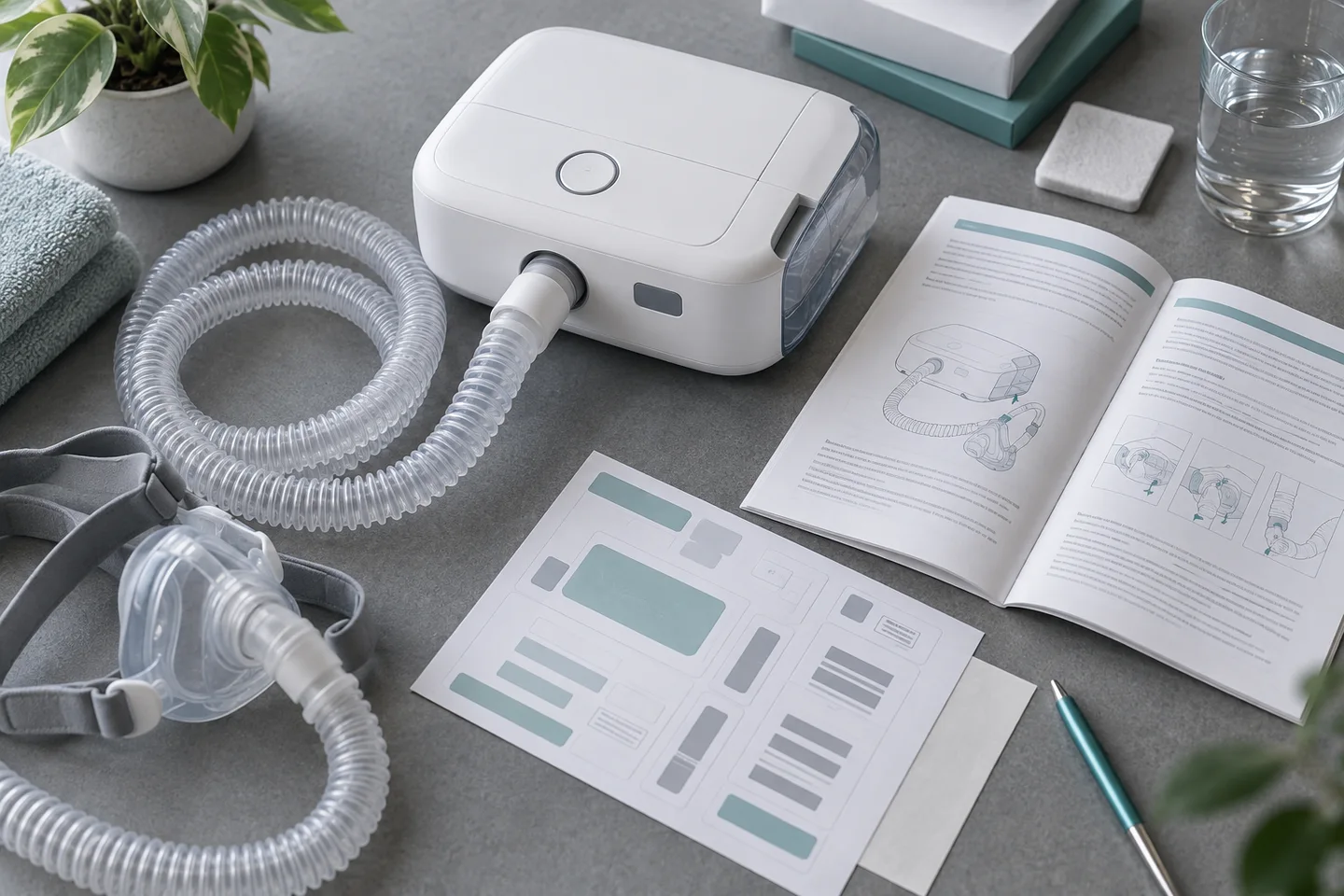
A Chinese manufacturer preparing home respiratory device content for European markets and the UK needed coordinated instructions for use, packaging labels, software text and quick-start guidance. Previously separate workflows had left mode names inconsistent and updates out of sync.
Limited label space, interface length constraints and changing source documents made review more complex. The manufacturer’s regulatory affairs team also needed to trace what had changed, where a terminology decision applied and which version had been approved.
Project scope
IFU, labeling and software localization
- Product
- Home respiratory device
- IFU
- Approx. 26,000 English-reference words
- Labels
- Approx. 7,200 words
- Software interface
- Approx. 5,200 strings
- Quick guide
- 20 pages; approx. 6,000 words
- Terminology
- 1,480 core entries
Languages in this projectGerman, French, Italian, Spanish, Dutch, Polish, Swedish, Danish, Norwegian, Finnish, Czech, Portuguese and British English.
How we approached the work
Agree the review responsibilities
At kickoff, we worked with the client’s regulatory team to establish the required languages, document scope, retained symbols, labeling constraints and approval responsibilities. Intended-use statements and critical safety content remained subject to the client’s final review.
Build a shared language resource
We assembled a terminology base covering mode names, alarm codes, components, safety language and maintenance instructions. Entries included definitions, context, preferred and prohibited translations, approval status and versions. Native-language translation and independent review applied these decisions across the document set.
Control layout and changes
DTP checks addressed fonts, overflow, symbols, cross-references and label layout. Software strings were checked for length and consistency with the IFU. Change logs linked updated files to terminology and translation-memory versions, while impact reviews identified labels, UI text and guides affected by source changes.
From preparation to delivery
- DefineWeeks 1-4
Requirements, asset analysis, terminology and client review
- ProduceWeeks 5-13
Translation, review, DTP and software text, with overlapping workstreams
- DeliverWeeks 14-16
Final QA, version records and client acceptance
What the client received
- 13-language IFU package
- Localized labels and software resources
- Localized quick-start guides
- Terminology and translation memory
- DTP files and final PDFs
- Version histories and QA reports
Documentation ready for the client’s next review
The client’s regulatory affairs team accepted the completed package for use in its registration-support and notified-body communication workflows. The project record reports that terminology, label layout and version traceability met the client’s internal requirements.
The engagement continued through an annual maintenance agreement covering changes to instructions, labels and software text. Regulatory decisions remained with the relevant authorities and review bodies; the localization work supported that process rather than determining its outcome.
- 1,480
- Core terminology entries
- 13
- Language versions
- Accepted
- By the client’s regulatory team
Client acceptance describes the localization delivery. It is not a claim of regulatory clearance or product approval.
Project questions
Who approved critical safety content?
The client’s regulatory affairs team or its designated regulatory adviser retained final review of critical safety information, intended use, warnings and contraindications.
How were later updates handled?
The project used change logs, versioned language resources and impact checks across IFUs, labels, software text and quick-start guides. The follow-on maintenance agreement covered those updates.