Introduction
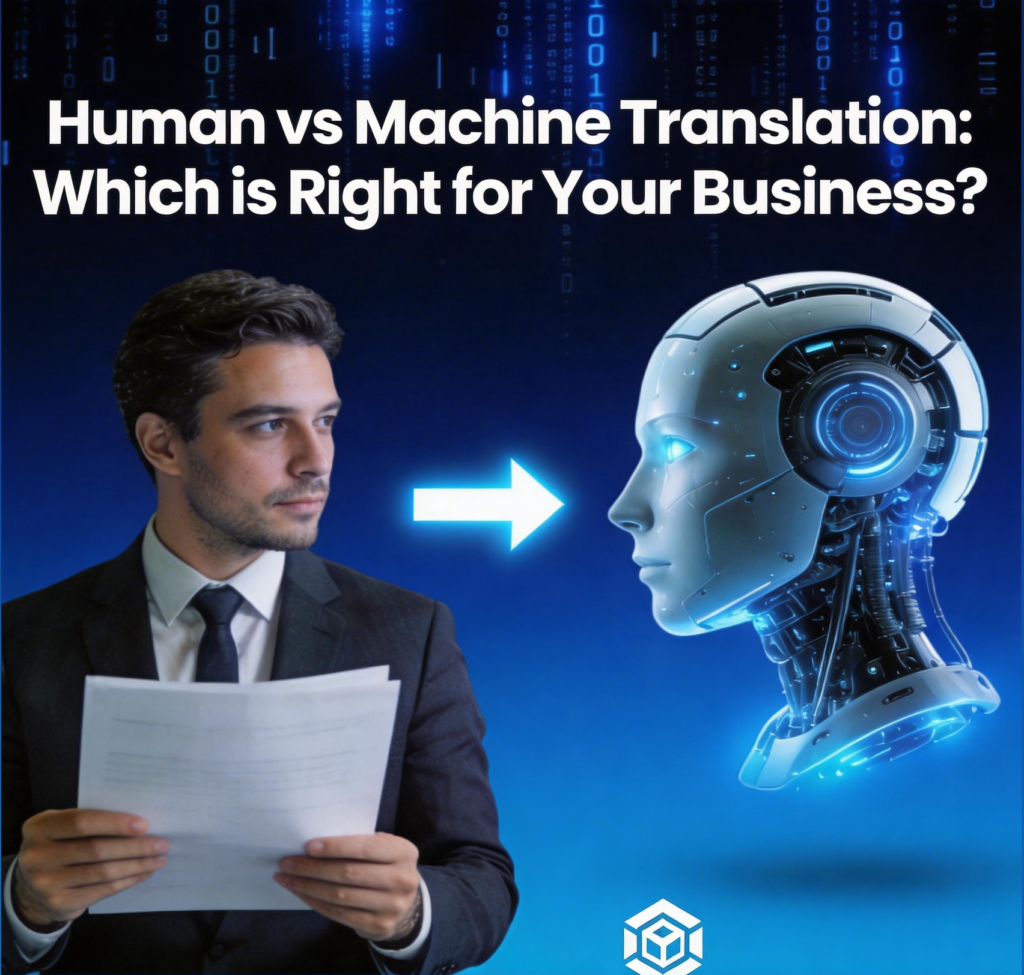
If you've ever searched for a translation solution, you've probably faced this question: should you use machine translation (like DeepL or Google Translate) or hire a professional human translator? Both options exist, both have real uses — but choosing the wrong one can cost you time, money, and credibility.
In this guide, we break down exactly how human and machine translation differ, where each one excels, and how to decide which is right for your specific project.
What Is Machine Translation?
Machine translation (MT) uses artificial intelligence to automatically convert text from one language to another. Tools like Google Translate, DeepL, and Microsoft Translator process millions of words per second using statistical models and neural networks.
Machine translation is fast, free or very low‑cost, and has improved dramatically in recent years — especially for common language pairs like English‑Spanish or English‑French.
When machine translation works:
- Getting a rough understanding of a foreign‑language document
- Translating large volumes of informal content (e.g., user reviews, support tickets)
- Internal communications where accuracy is less critical
- Early‑stage content where speed matters more than polish
What Is Human Translation?
Human translation is performed by a professional linguist who is fluent in both the source and target language — and ideally has domain expertise in your industry.
A skilled human translator doesn't just convert words; they adapt tone, preserve meaning across cultural contexts, and ensure your message resonates with the target audience.
When human translation is essential:
- Legal, medical, or regulatory documents where accuracy is non‑negotiable
- Marketing content, website copy, and brand materials that need to land culturally
- Subtitles and video localization where timing and tone matter
- Any content your company will publish, sign, or send to clients
Head‑to‑Head Comparison
| Factor | Machine Translation | Human Translation |
|---|---|---|
| Speed | Instant | Hours to days |
| Cost | Free – low cost | Higher, reflects expertise |
| Accuracy | Good for simple text | High, including nuance |
| Cultural adaptation | Minimal | Strong |
| Legal / technical reliability | Not recommended | Industry standard |
| Volume scalability | Unlimited | Scales with team size |
| Consistency across documents | Variable | Controlled with glossaries |
The Hybrid Approach: Machine Translation + Human Post‑Editing
Many businesses today use a hybrid model called MTPE (Machine Translation Post‑Editing): a machine generates the first draft, and a human editor reviews, corrects, and improves the output.
This approach can reduce costs by 30–50% compared to fully human translation, while maintaining professional quality. It works well for high‑volume, repetitive content — such as product descriptions, technical documentation, or e‑commerce listings.
However, MTPE is not appropriate for all content. Legal contracts, marketing taglines, and high‑stakes communications still require full human translation.
How to Choose: A Simple Decision Framework
Ask yourself these three questions:
- Will this content be seen by clients, partners, or the public? → Human translation.
- Does accuracy have legal, medical, or financial consequences? → Human translation.
- Is this content informal, internal, or exploratory? → Machine translation may be sufficient.
If you're still unsure, the safest default is human translation. The risk of a machine translation error — especially in client‑facing or legal material — almost always outweighs the cost savings.
How Smart Language Service Approaches This
At Smart Language Service, we offer both professional human translation and MTPE services, depending on your project requirements. We help clients evaluate their content type, volume, and risk level to recommend the right approach — and we're transparent about the tradeoffs.
Our team specializes in legal, technical, and media content, with linguists who have domain expertise, not just language fluency.
Summary
- Machine translation is fast and cost‑effective for informal or exploratory content.
- Human translation is essential for anything client‑facing, legal, or culturally sensitive.
- The hybrid MTPE model offers a middle ground for high‑volume, professional content.
- When in doubt, prioritize quality — a bad translation can damage your reputation and create legal risk.
Ready to figure out which option is right for your project?